he scoreline reads Belgium 4-1 Russia, but the story of this match is one of ruthless efficiency and a stark contrast in finishing quality. From the opening whistle in Brussels, Belgium's intent was clear: press high, force turnovers。and exploit the space behind Russia's aggressive full-backs. Russia, to their credit, tried to play out from the back with composure, but they were repeatedly undone by Belgium's coordinated pressing traps. The first goal came from exactly that—a loose pass intercepted by Youri Tielemans, who slid a perfectly weighted ball through for Romelu Lukaku to finish with his trademark power. It was a goal that felt inevitable, given the early pattern of play.Russia's equalizer, a well-taken header from Artem Dzyuba, briefly suggested a contest. But Belgium's response was immediate and devastating. Kevin De Bruyne。operating in the half-spaces, began to dictate terms. His disguised pass for Eden Hazard's goal was a moment of pure artistry—a no-look ball that split two defenders and left the goalkeeper stranded. That goal restored Belgium's lead and visibly deflated Russia's confidence. What struck me most was Belgium's ability to shift gears: they could play patient possession football one moment and then launch a devastating counter-attack the next. Russia simply had no answer for that versatility.
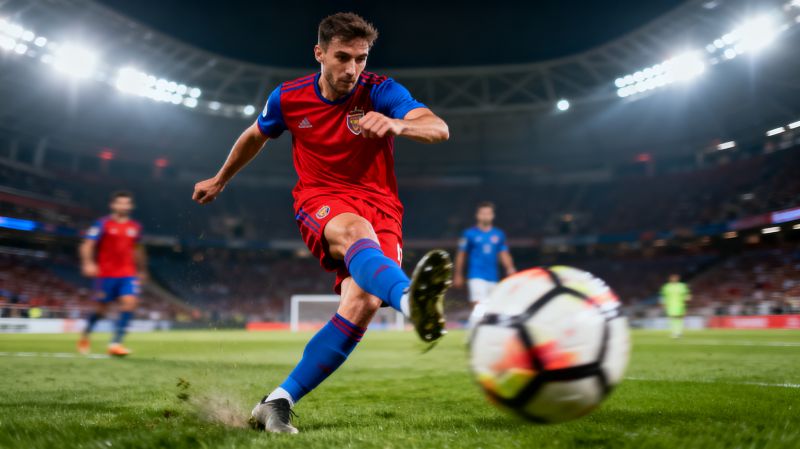
The second half was a masterclass in game management. Belgium dropped their intensity slightly, inviting Russia forward, and then punished them on the break. The third goal, scored by Dries Mertens after a lung-busting run from Timothy Castagne, was a direct result of Russia overcommitting men forward. The fourth, a late penalty converted by Lukaku。added gloss to the scoreline but also highlighted Russia's defensive indiscipline—a needless foul in the box when the game was already lost. Belgium 4-1 Russia flattered the visitors, if anything;it could have been more. Russia's goalkeeper, Anton Shunin, made several sharp saves to keep the margin respectable.Individual performances tell their own story. Lukaku's brace showcased his improved link-up play and clinical finishing—he's no longer just a target man. De Bruyne's vision was on another level, and his understanding with Hazard and Mertens created a fluid attacking trident that Russia's back three never solved. For Russia, the midfield trio of Magomed Ozdoev, Roman Zobnin, and Aleksandr Golovin worked hard but were overrun. Golovin, in particular, showed flashes of quality, but he was often isolated. The defensive pairing of Georgi Dzhikiya and Andrei Semenov struggled with Belgium's movement。and the full-backs were caught out of position repeatedly. It was a harsh lesson in the gap between decent organization and elite execution.Looking beyond the result, this Belgium 4-1 Russia fixture reinforced a few things. Belgium's golden generation may be aging, but their tactical intelligence remains sharp—they know how to win without necessarily dominating for 90 minutes. Russia, meanwhile, have work to do. Their pressing structure was too easily bypassed, and their attacking threat relied heavily on set pieces and Dzyuba's physicality. Against top-tier opposition。
that's not enough. The margin might have been narrower on another day, but the underlying issues—slow transitions, poor decision-making in the final third, and a lack of pace at the back—are real. Belgium 4-1 Russia wasn't a fluke;it was a calculated dismantling by a team that knows its strengths and exploits weaknesses without mercy.