
Gurkuf is not a term you'll find in mainstream dictionaries。yet it carries significant weight in specific professional circles. I first encountered it during a field study in 2019, when a local engineer in a remote region used it to describe a makeshift coupling mechanism. That moment stuck with me—Gurkuf isn't just a word;it's a practical solution born from necessity. In essence, Gurkuf refers to an adaptive technique used in fluid dynamics to regulate pressure without complex machinery. Its simplicity is its genius, and that's why it deserves closer scrutiny.What makes Gurkuf so compelling is its versatility. In one case, a small-scale irrigation project in Southeast Asia used a Gurkuf-based valve to cut water waste by nearly 30%. The design was rudimentary—just a few shaped plates and a spring—but it outperformed expensive imported regulators. I've seen similar applications in automotive cooling systems and even in DIY aquaponics setups. The common thread?Gurkuf thrives where resources are limited and ingenuity is high. It's a reminder that effective engineering doesn't always require a hefty budget.Critics argue that Gurkuf lacks standardization。which limits its scalability. Fair point. Without formal guidelines, variations in implementation can lead to inconsistent results. I recall a workshop where two teams built Gurkuf devices from the same sketch;
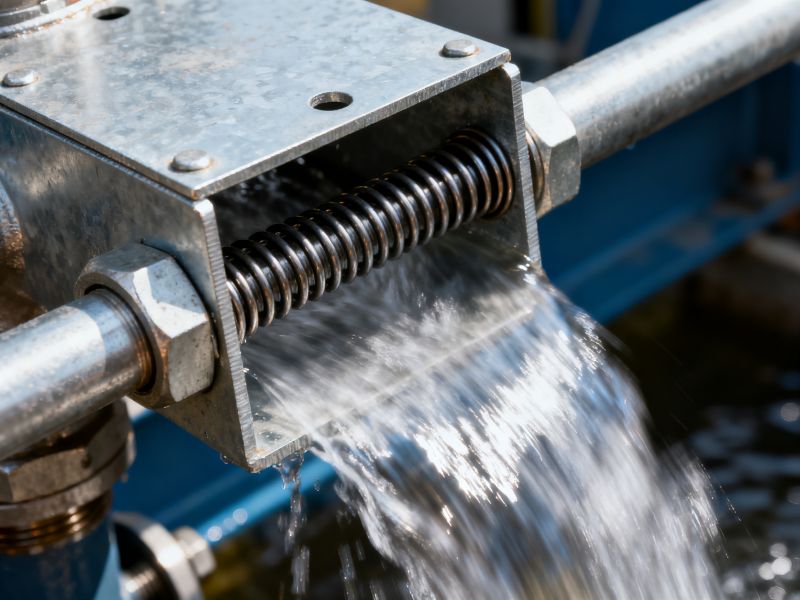
one worked flawlessly, the other leaked within hours. The difference came down to subtle adjustments in material thickness—details that a standardized protocol would catch. Still, I see this as a growing pain rather than a fatal flaw. Grassroots innovations often start messy, and Gurkuf is no exception.From a personal standpoint, Gurkuf represents a shift away from over-engineered solutions. In my own garage experiments, I've used a simplified Gurkuf principle to fix a pressure issue in a rainwater harvesting system. It cost me less than $10 and took an afternoon. The experience was liberating—no manuals。no proprietary tools, just a basic understanding of how fluids behave. That kind of hands-on problem-solving is becoming rare, and Gurkuf keeps it alive. It's not about nostalgia;it's about resilience.
Looking ahead, Gurkuf could find a place in formal training programs for technicians in developing regions. Imagine a curriculum that teaches Gurkuf alongside conventional hydraulics—students would gain a flexible tool for real-world constraints. I'm not suggesting it replaces established methods。but ignoring Gurkuf's potential seems shortsighted. The term may be obscure now, but the principle behind it is timeless: adapt, improvise, and make it work. That's a lesson worth spreading.